
The question isn't whether crack sealing works,
it's why you haven't scheduled it yet.
Prevent the destructive impacts of the freeze/thaw cycle.
Crack Sealing Steps
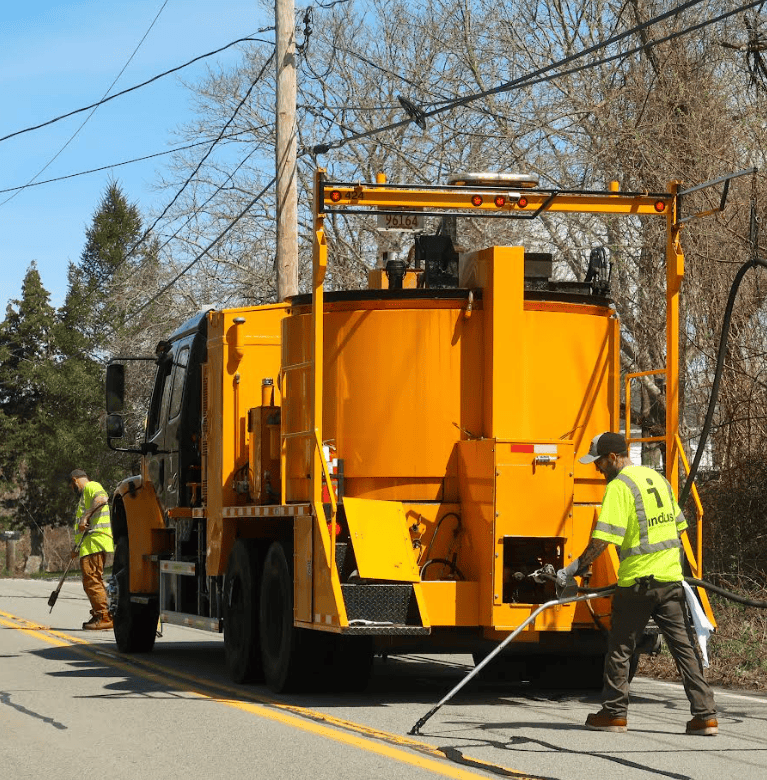
Contact indus today for help in fast-tracking candidate selection and procurement
An annual crack sealing program is the most cost-effective way to make pavements last longer.
With cooler weather fast approaching, now is the time to get on the schedule and prevent worse deterioration down the road.Benefits of crack sealing
- A critical line of defense against water infiltration
- Greatly reduces potholes and future deterioration
- Extends road life by 2-5 years
- Treated roads can be opened quickly to traffic
- Lowers overall cost of pavement preservation over time
“We have used indus’ diverse technology including crack sealing, micro surfacing, and cold in-place recycling. All have produced remarkable results at significant cost savings.”
— David S. BillIps, Director of Public Works, Westfield, MA