
Amherst, MA.
Client: Town of Amherst, MA Department of Public Works
Project Year: 2024
Key Contacts: Jason Skeels, Town Engineer; Nate Vannoy, Assistant Town Engineer
Project Snapshot
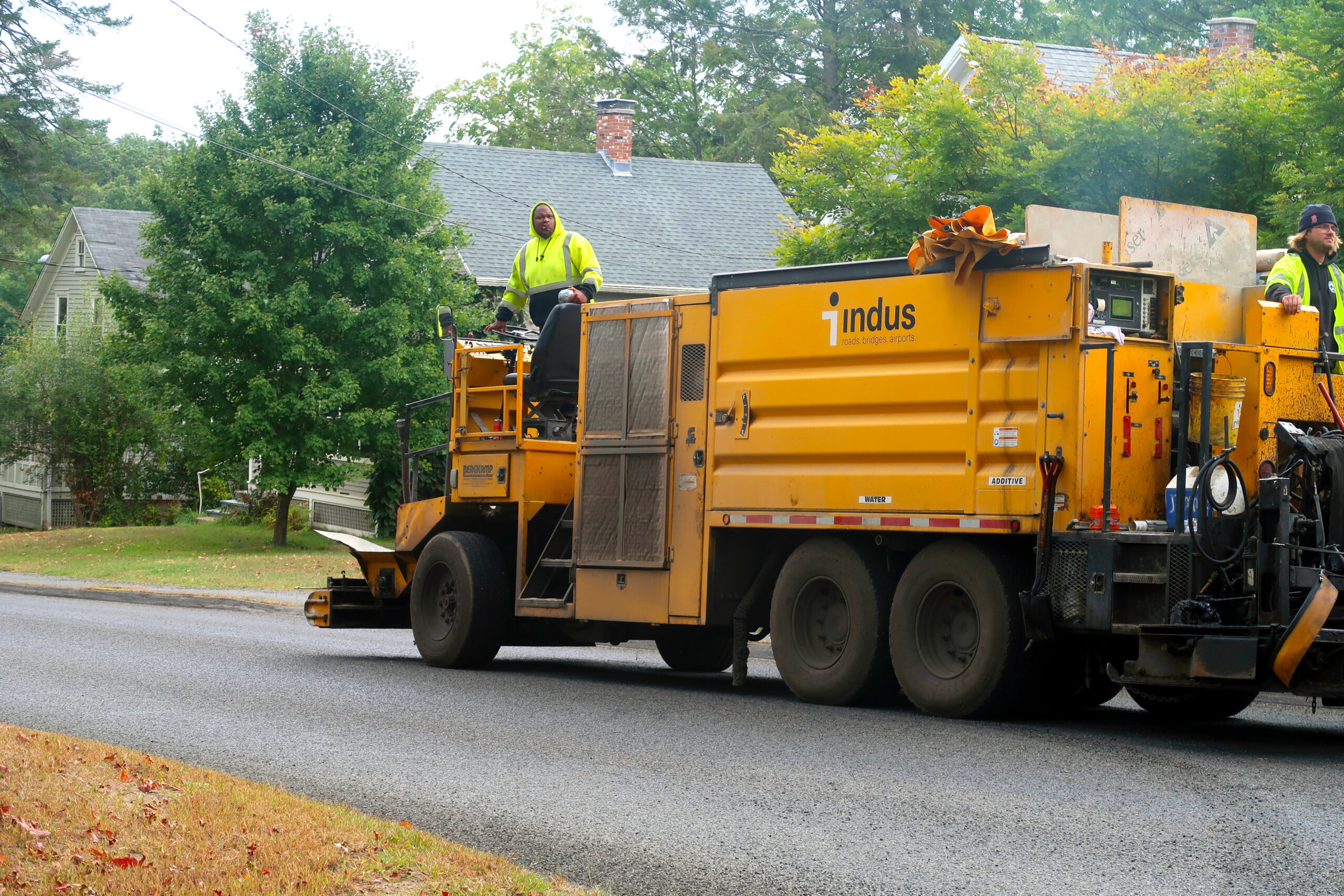
In 2024, the Town of Amherst moved to broaden their preservation toolbox by piloting cape sealing on several main and neighborhood streets. The goal: test modern preservation strategies that extend road life, limit community disruption, and delay costly rehabilitation. After one season, town engineers report results that look and feel like a new road, smoother driving, improved surface strength, and confidence to expand the program next year.
Objectives
- Preserve roads in fair to moderate condition and avoid premature mill-and-fill.
- Test alternative treatments by comparing a cape seal with rubber chip seal vs. conventional
- Maintain traffic flow and minimize stone loss on busy main roads.
- Demonstrate long-term cost-effectiveness and durability for Amherst’s pavement management strategy.
Why Cape Seal?
Cape seal pairs a chip seal interlayer with a micro surfacing wearing course. This combination:
- Restores structural interlayer integrity,
- Locks-in aggregate to reduce stone loss,
- Provides a smooth, durable riding surface,
- Extends pavement life commonly 8–10 years when applied to roads in the appropriate condition.
For Amherst, cape sealing offered the restorative qualities of chip sealing with the smoothness of micro surfacing for a ride quality and appearance of asphalt. This is ideal for roads too deteriorated for a single surface treatment but not yet candidates for full rehabilitation.
Scope & Technical Details
Preparation
- All candidate roads underwent pre-treatment crack sealing and selective manhole and structure adjustments to ensure a uniform finish.
- Roads were selected based on current condition and being ideal candidates for corrective maintenance outside traditional mill-and-fill.
Rubber Chip Seal with a Double Lift of Micro Surfacing
- Application #1: Rubber Chip Seal
- Application #2: Double Lift of HiMA Micro Surfacing (36#/sy)
- Roads: South Pleasant / West Street (Snell St – 445 West St)
- Roads / Quantities:
- South Pleasant / West Street C (Snell St – 445 West St):
9,655 x 38 = 40,766 SY (9/24/24) - Total Rubber Chip Seal = 40,766 SY
Conventional Chip Seal with a Single Lift of Micro Surfacing
- Application #1: Conventional Chip Seal
- Application #2: Single Lift of HiMA Micro Surfacing (25#/SY)
- Roads / Quantities:
- Stony Hill Road (Heatherstone Rd – Gatehouse Rd):
1,550 ft × 30 ft = 5,167 SY (9/24/24) - Strong Street (East Pleasant St – Northeast St):
5,115 ft × 28 ft = 15,913 SY (9/23/24) - Total Conventional Chip Seal: 21,080 SY
Schedule
- Strong Street: 9/23/2024
- South Pleasant, West Street & Stony Hill: 9/24/2024
The Process (how cape seal was applied)
- Crack sealing to seal cracks and prevent water infiltration. Also aids in reducing reflective cracking and crucial step to preservation treatments.
- Chip seal application with specified asphalt binder and aggregate the binder fills fine cracks and is used as stress absorbing interlayer.
- Curing period for chip seal (a few days) to allow proper embedment.
- Micro surfacing lift(s) applied over the cured chip seal, locking aggregate in place and providing a smooth, uniform wearing surface.
- Rapid return to traffic after each phase to limit community disruption.
Results & Benefits
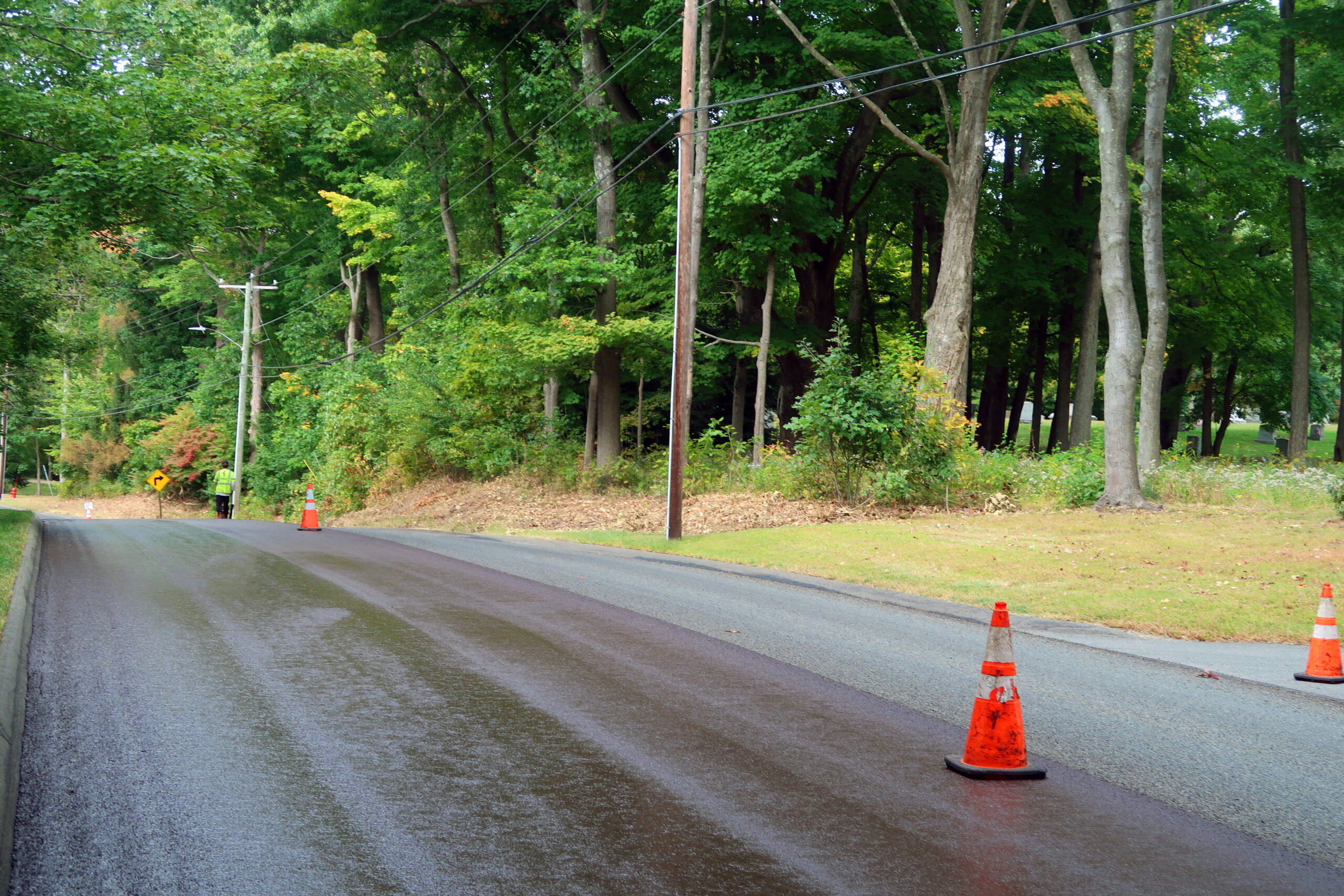
- Improved smoothness and ride quality with many residents reporting the feel resembles a full asphalt paving job.
- Structural strengthening of the surface layer and increased resistance to moisture and oxidation.
- Minimal community disruption and fast return-to-service after each phase.
- Cost-effective preservation that extends the life of treated roads by 8–10 years versus more frequent patching or early rehabilitation.
- Reduced stone loss on main roads through the use of rubber chip on heavier-use corridors.
Town Feedback:
“Our Department of Public Works is very pleased with the results of the recent cape seal pavement preservation project completed by indus. The treatment has already improved roadway smoothness, strengthened the surface, and extended the life of our infrastructure—all with minimal disruption to the community. This successful project reflects our ongoing commitment to maintaining safe, reliable, and cost-effective roadways for the public.”
— Amherst Department of Public Works
Lessons Learned & Best Practices
- Pre-treatment matters: Thorough crack sealing and structure adjustments ensure consistent finishing and performance.
- Match treatment to road function: micro surfacing over rubber chip seals on main roads preserve stone retention and durability; conventional chip + micro works well for lower-volume collectors and neighborhood streets.
- Pilot & scale: Amherst’s experimental approach provided real-world proof and confidence to expand preservation tools across the town’s network.
- Community communication: Early outreach and clear return-to-traffic timelines helped minimize disruption and increase public support.
Conclusion
Amherst’s 2024 cape seal pilot demonstrates how a strategic preservation-first approach can transform a municipal pavement program by delivering smoother, longer-lasting roads with reduced lifecycle costs and minimal impact on residents. The success of this project positions Amherst to continue shifting from short-term fixes toward a sustainable, total-curve pavement management strategy.